

Amani Flatwing (Amanipodagrion gilliesi) Case Study
Home > Biodiversity Nature & People > Conservation Philanthropy > Grants > MBZF Grant 12254044
Continent: Africa
Country: Tanzania
Grant Amount: $8,000
Awarded Date: October 16, 2012
Viola Clausnitzer
Senckenberg Research Institute
Am Museum 1
Görlitz
Saxony
02826
Germany
Tel: 0049 (0)3581 47605720
Mob:
Population and habitat monitoring for the Amani Flatwing
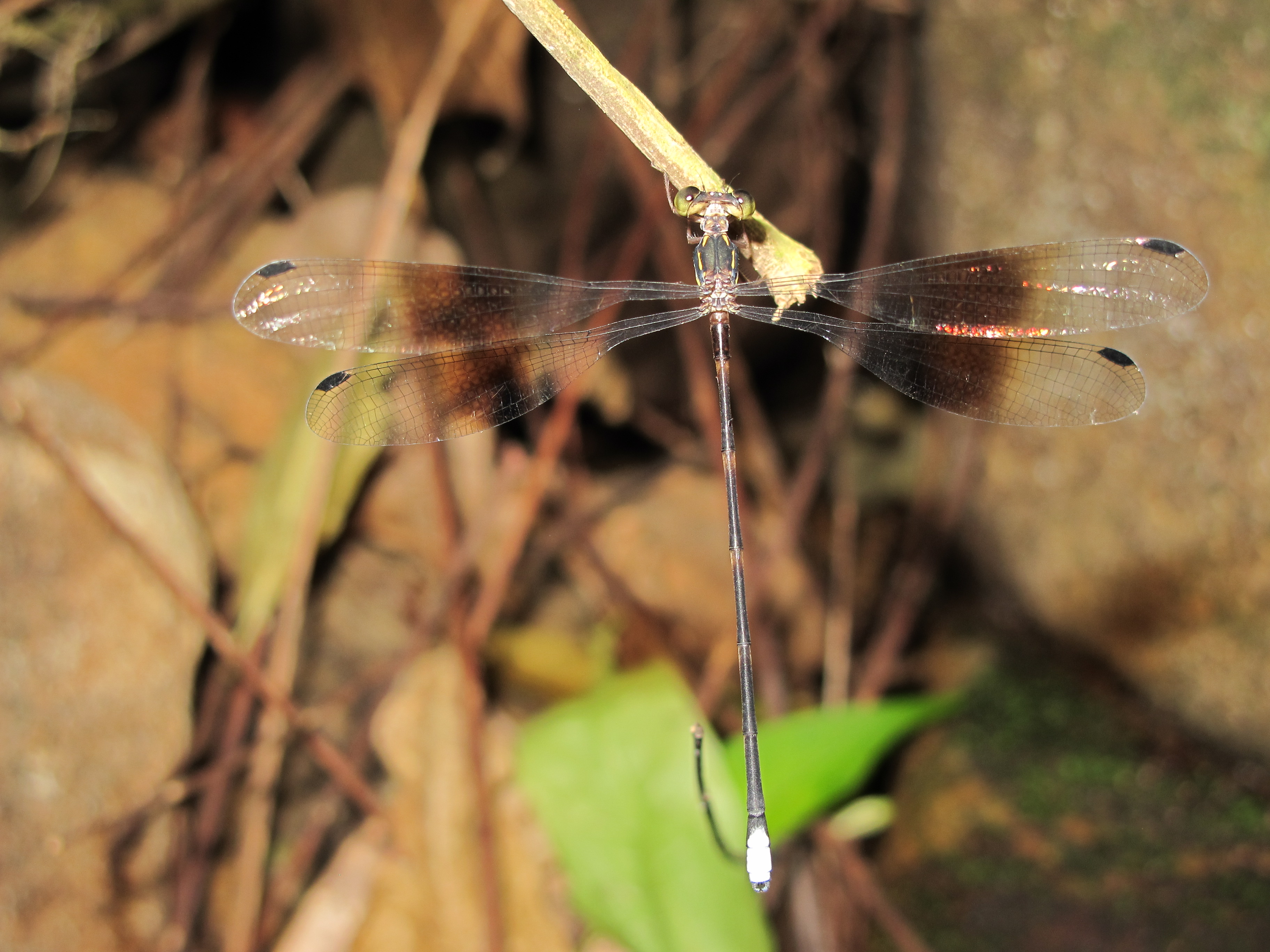
The Amani Flatwing is one of the world's rarest dragonflies, threatened with extinction due to its restricted range and its small population in the Usambara Mts. To secure the species' survival on earth a workshop was jointly organized by Eustack Mtui from theTanzanian Forest Conservation Group (TFCG) and Dr. Viola Clausnitzer from Senckenberg, Germany.
Conservation project for the endemic and CR listed Amani Flatwing, East Usambara Mts
Dr. Viola Clausnitzer (DSG), Nike Doggart & Eustack Mtui (TFCG) and Amani Nature Reserve
The Amani Flatwing (Amanipodagrion gilliesi) is a genetically isolated relict species dwelling along streams the Amani Sigi Forest. It is only known to occur on 2 streams within the Amani-Sigi forest of the East Usambara Mountains in north-eastern Tanzania. Not much is known about the species' ecology, but it seems to be restricted to clear and fast streams in a tiny part of the Amani-Sigi Forest, with the prime population found along the small stream beyond the Sigi Forest station.
Though the Amani-Sigi Forest is currently legally protected within the Amani Nature Reserve, the protection is very fragile with a growing population pressure and ongoing small-scale mining in the areas. The limited distribution range of the Amani Flatwing and the still ongoing habitat destruction make the species a candidate of high conservation concern on the rim of extinction. A single event of polluting the streams or an extreme drought might be the end of this species.
The Amani Flatwing is listed as Critically Endangered (CR) on the IUCN Red List of Threatened SpeciesTM (www.iucnredlist.org) and its survival depends on monitoring and conserving the habitat and the population, while at the same time more information on the species' ecology is allocated for species specific habitat management.
To secure the species' survival on earth a workshop was jointly organized by the Tanzanian Forest Conservation Group (TFCG) and a German Scientist, generously supported by the Mohamed bin Zayed Species Conservation Fund. Led by TFCG senior officer Eustack Mtui and Dr. Viola Clausnitzer a mixed group of village representatives, tourist guides and conservationists had a workshop, including a field trip to see the elusive rarity of the Amani-Sigi Forest.
Attention was also paid to the necessity of a healthy environment for human well being. Here clean water and sufficient water is a key element. Dragonflies, who spend their larval life in the water, can act as "guardians of the watershed" – indicating the quality of the water habitat.
The text and images for this case study are uploaded by the grant recipient to raise awareness of the conservation work being done. Through its website the Fund provides the platform, but is not responsible for text or image content of case studies. We would like to sincerely thank the recipient for uploading a case study.
